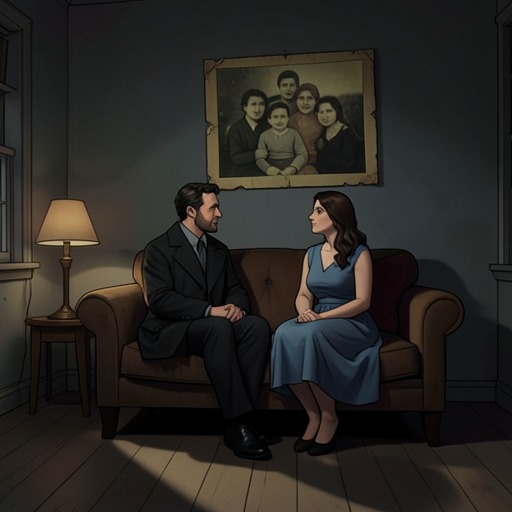
Mike Hoolihan and Tobe’s relationship
Night TrainMike Hoolihan and Tobe’s relationship is a gradual domestic partnership in which companionship is both desired and difficult for Mike to trust. Mike describes love as destabilizing, something he cannot afford to be destabilized by; against that fear, Tobe’s patient presence takes on particular weight. Their relationship does not erase Mike’s past or the strain of his recovery, but it gives him a way to say plainly that he does not live alone.
Identity and Background
Tobe is Mike’s boyfriend and the person who shares his apartment. Mike presents him as a dear man whose company matters to him, while also acknowledging that he struggles with love and with the vulnerability it brings. Tobe’s physical size is a recurring part of Mike’s description: he fills the room, and his late arrival is audible through the building. This practical, almost comic detail grounds the relationship in shared space rather than in romantic idealization.
Mike’s crowded routine leaves little time for a partner. It includes AA, golf, a Monday discussion group, a Thursday night class, correspondence courses, a Tuesday night shift, and Saturdays spent with friends. Tobe apparently points out that Mike has no time for a boyfriend; Mike concedes that he may be right, but insists that he does have one. The contradiction captures their situation: intimacy exists, but it has to find room among work, recovery, and the habits with which Mike organizes his days.
Past Relationships and the Fear of Intimacy
Before Tobe, Mike’s relationship with Deniss taught him that love could be destabilizing. When Mike once told a doctor that he lived with Deniss, Deniss was in fact already driving away in a U-Haul with his belongings, heading toward the state line. Mike’s account corrects itself: he did live alone. The departure gives his later insistence on living with Tobe a history. Being partnered is not an uncomplicated condition for him, and the difference between an absent former partner and a present one matters.
Mike does not claim to have overcome his difficulty with love. Instead, he describes Tobe as someone who seems prepared to stay and gradually grow on him. Mike suspects that this is Tobe’s strategy, and says that it is working, though very slowly. The cautious phrasing preserves Mike’s ambivalence: he recognizes the care being offered without pretending that trust has become effortless or complete.
Shared Domestic Life and Recovery
Their relationship is expressed through ordinary arrangements as much as declarations. Tobe rooms with Mike, and Mike cooks him an early dinner. When Mike tells him what will be on television that night, Tobe goes to Fretnick’s for a couple of drinks. Alcohol remains in the apartment; Mike says he likes knowing it is there, despite knowing that drinking would be dangerous for him. The detail marks recovery as an ongoing condition of their household, not a resolved episode. The evidence does not cast Tobe as responsible for managing Mike’s sobriety, but it places the relationship within the everyday circumstances that make sobriety consequential.
Mike’s account of his earlier collapse supplies more context for that vulnerability. Near the end of his Homicide career, he arrived at work late and drunk, and Colonel Tom took him to Lex General. After being dried out, Mike convalesced at the Rockwells’ home. During that earlier period, Jennifer Rockwell, then nineteen, read to him in the evenings. Mike remembered her as someone who did not judge him. These recollections connect his present relationship with Tobe to a longer history of receiving care while ill, though they do not make Tobe a substitute for the people who helped him before.
Affection, Physical Limits, and Change
A later moment between Mike and Tobe shows a change in what Mike can welcome. Now sober, Mike experiences Tobe’s approach to intimacy as gentle and dear; he contrasts this with an earlier preference for roughness, or what he had believed he preferred. He now dislikes the idea of that roughness. The passage presents the difference as a shift in Mike’s own needs, not as a transformation that Tobe imposes on him. Tobe’s careful, deliberate effort is important precisely because Mike describes it as patient and tender.
Mike is also attentive to the physical difficulty of Tobe’s life. Late one night, after returning to the apartment around midnight, he stands over Tobe as he sleeps and considers how hard it is for him even to sit watching a game show with a beer. Mike’s description makes Tobe’s body a source of ongoing hardship, though it supplies no diagnosis. Concern enters the relationship through this observation: Mike sees not only the large presence that fills their home, but also the suffering that remains with Tobe when he is asleep.
Absence, Loss, and the Meaning of Staying
Mike’s assurance that he lives with Tobe is set beside the novel’s recurring presence of the dead. After Jennifer’s death, Mike wakes to see her at the foot of his bed; the apparition disappears when he opens his eyes. He describes the dead as if they must divide into many ghosts to visit the many people who sleep, and recalls Jennifer appearing during his earlier convalescence. These episodes belong to Mike’s experience of loss, not to a claim that Tobe can prevent or resolve it. Their juxtaposition instead shows the different forms of presence in his life: the dead return as visions, while Tobe remains in the shared apartment.
The passing night train also figures in the couple’s domestic rhythm. Mike wonders whether an approaching sound on the stairs is Tobe or the first rumor of the train, then reaffirms that he lives with Tobe. Much later, he returns to the apartment around midnight and plans to remain awake until the train comes, as he once did when his days held little beyond staying sober. This ending does not settle the relationship into uncomplicated comfort. It places Tobe’s continuing presence beside Mike’s loneliness, grief, and chosen wakefulness, making their partnership a real but unfinished form of company.